Music Lessons
A shared practice of listening, exploration, and musical growth.
Finding your sound is not about reaching a fixed goal, but about learning how to listen to the instrument, to yourself, and to the music.
In lessons, I work alongside students to explore technique, expression, and musical sensibility through a shared practice, where curiosity and trust guide the process.
Areas of Practice
Piano Lessons
Performance is approached as a practice of listening and response. Lessons focus on sound, timing, phrasing, and presence at the instrument, drawing from jazz, pop, classical music, film music and improvisation. Not only aiming for perfection, the work also supports clarity, confidence, and ease in playing.
Music Theory in Practice
Music theory is explored through sound and experience at the piano. Harmony, rhythm, and form are approached in relation to what is being played and heard, allowing understanding to grow naturally from musical practice rather than abstraction.
Creating Your Own Music
For students interested in composing or songwriting, lessons create space to develop personal musical ideas. Through working with various musical elements and improvisation, students are supported in shaping music that reflects their own imagination and direction.
Who This Is For
Lessons are open to students of different ages and levels who are curious about sound and willing to explore their own musical process.
This practice suits those who want to develop at their own pace, whether their focus is focused musical study, personal expression, or simply finding more ease and enjoyment at the piano.
Teaching Context
I have been teaching piano since 2012, working with students in private lessons, music academies, and international school settings. I currently teach jazz piano and applied music theory at UWC Maastricht, and piano in a range of styles at SCHUNCK.
Alongside this, I work with students privately across different ages and backgrounds, from beginners to advanced musicians. Students come with very different questions: classical players exploring jazz piano, songwriters developing their own material, artists creating music for their film or animation, and musicians looking to expand their sound beyond a single style. Lessons are shaped in response to the individual and their musical context.
Background
Education
- Master’s degree in Specialized Composition and Performance (Jazz), Maastricht Conservatorium
- Bachelor’s degree in Jazz Piano Performance, Maastricht Conservatorium
- Bachelor’s degree in Classical Piano Performance & Art Management, Xinghai Conservatory of Music
- Teaching Diploma (EU)
Practical Information
Piano, music theory and composition lessons in Maastricht
Music lessons are primarily based in Maastricht, with additional teaching taking place at SCHUNCK in Heerlen.
All ages, styles and levels of experience are welcome.
If you’re interested in working together or have questions about lessons, you’re welcome to get in touch:
Student Voices
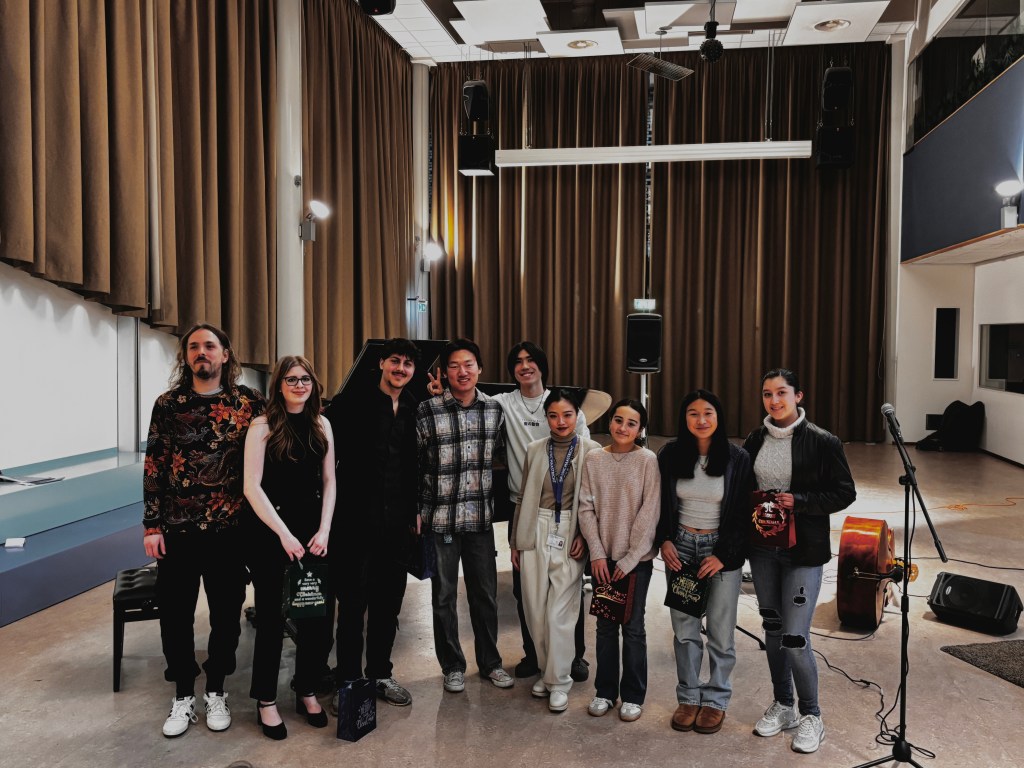
Moments from student work and shared learning contexts.
Changing how I listen to and think about music — Glenn
Her lessons have changed the way I listen to and think about music.
She creates a thoughtful balance between structure and freedom, making improvisation feel natural while encouraging me to explore and develop my own musical voice.
Learning to listen and compose differently — Yoyo
The lessons are inspiring, as Pian works more like a guide than a traditional teacher. She guides you through the thought process behind the music, shaping a deeper understanding of music theory, performance, and jazz.
They not only changed my understanding of jazz, but also inspired the way I listen to and compose as a music lover. Often I start noticing things in the music I hear that we discussed in class, which makes the learning feel very real and connected to everyday listening.
Learning piano later in life, with patience and joy — Chen
Learning piano after your 30s is not easy, but it can be done if you have a teacher who understands you and embraces your limitations. Pian made that possible for me.
I always wanted to learn piano when I was little but never had the chance. When I finally did, I didn’t know where to start. I couldn’t read notes (and still struggle with that), so I had to “translate” them into numbers to know which keys to press. Pian accepted this and encouraged my passion for trying.
She kept the learning process fun, which is very important when you are an older student. The number of keys and chords didn’t scare me away. Even though I don’t always understand what she is talking about (sometimes it sounds like maths to me), the music is there and it sounds right.
It’s a great feeling to be able to play songs you know well and once only dreamed of playing. It’s equally meaningful to learn from a true musician like Pian, and to listen to her talk about music (and other things). It’s fun, it’s cool, it’s all good.
A shared moment from a student concert.
 Pian Vane